




UPDATED: August 2026
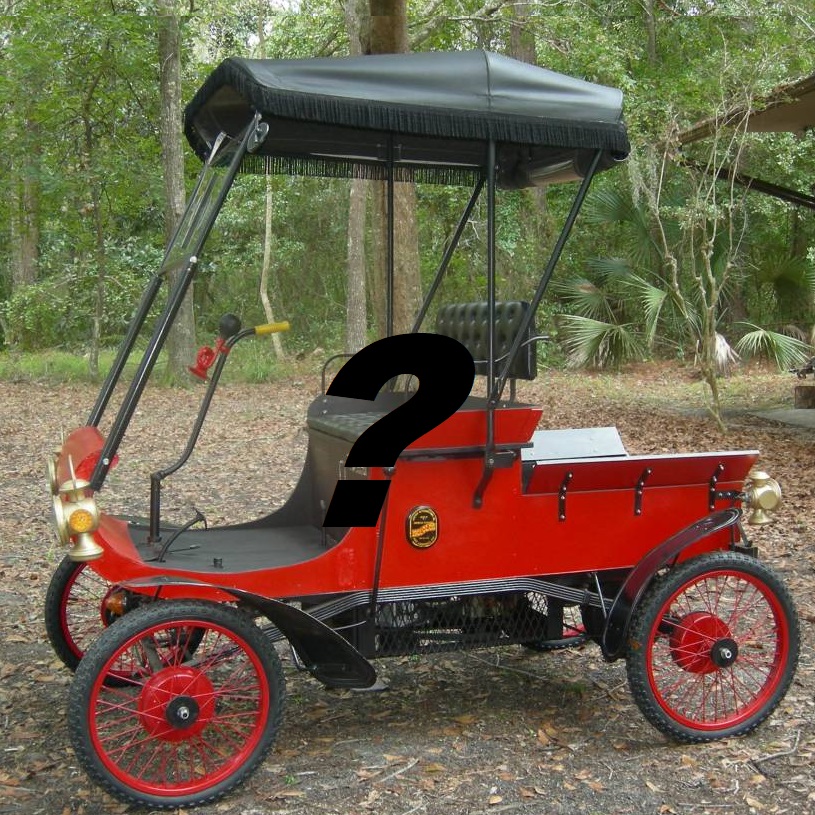
Trying to figure out what year, make, and model golf cart you own? You’re definitely not the first.
Whether you just bought a used golf cart, inherited one with no paperwork, or are simply trying to order the right replacement part, identifying your cart correctly is one of the most important things to do before you start shopping.
Golf cart parts are rarely one-size-fits-all. Windshields, rear seats, lift kits, light kits, body parts, battery chargers, suspension components, motors, controllers, and even some wheels and tires can change based on the manufacturer, model, model year, powertrain, and voltage of your cart.
The good news: in most cases, you can identify your golf cart with a serial number or manufacturer identification label.
Quick Answer: How Do I Find Out What Golf Cart I Have?
Before ordering parts or accessories, try to identify these five things:
- Manufacturer – Club Car, EZGO, Yamaha, ICON, Evolution, Advanced EV, etc.
- Model – such as Club Car DS, Precedent or Onward; EZGO TXT or RXV; Yamaha Drive or Drive2
- Model year or year range
- Gas or electric
- System voltage, if electric
Start by locating the cart’s serial number, manufacturer code, data plate, or VIN label.
Once you find it, take a clear photo of the entire label before trying to decode anything. A complete serial number is much more useful than one or two numbers copied from the tag.
Important: Don’t identify a used golf cart by appearance alone. Golf carts are heavily customized. Bodies, seats, roofs, lights, wheels, rear seats and other parts may have been replaced over the years.
Why Does the Golf Cart Model and Year Matter?
A golf cart may look almost identical to another cart and still require completely different parts.
Manufacturers make changes throughout a model’s production run, including changes to:
- Suspension and steering
- Body mounting points
- Seat brackets
- Windshield dimensions
- Roof supports
- Electrical systems
- Controllers and motors
- Battery trays
- Charger receptacles
- Wiring harnesses
- Brake systems
- Rear seat mounting locations
Sometimes a product fits a broad range of years. Other times, a single model-year change is enough to require a completely different part.
That’s why you’ll frequently see compatibility listed as something like:
EZGO TXT 1994–2013
instead of simply:
EZGO TXT
If you’re shopping for golf cart parts and accessories, confirming the cart first can save a lot of frustration, return shipping, and installation headaches.
What Year Is My Club Car Golf Cart?
The easiest way to identify a Club Car is by finding its serial number decal.
Club Car currently states that its vehicle serial-number barcode decal can generally be found below the passenger-side cup holder or above the accelerator/brake pedal area, depending on the vehicle. The letters at the beginning of the serial number identify the model, while the following digits contain the model-year and production information.
Common Club Car Models
Some of the Club Car models you’re most likely to encounter include:
- Club Car DS
- Club Car Precedent
- Club Car Tempo
- Club Car Onward
- Club Car Carryall
- Club Car XRT
For parts and accessories, simply knowing that you have a “Club Car” usually isn’t enough.
For example, a Club Car DS and Club Car Precedent can use completely different windshields, body parts, seat components, suspension parts and accessories.
Likewise, many products are designed for Club Car Precedent, Tempo & Onward together, while others are specific to only one of those models or a particular year range.
Browse Club Car Golf Cart Parts & Accessories
How to Read a Club Car Serial Number
Club Car serial numbers typically begin with one or two letters identifying the vehicle model.
The production information immediately following that prefix can then be used to determine the model year and production week.
If you’re unsure what the prefix means, Club Car also maintains an official serial-prefix decoder.
What Year Is My EZGO Golf Cart?
EZGO serial-number locations have changed over the years and vary by model.
For current owner information, EZGO notes that vehicles manufactured before 2023 may have the serial number next to a barcode on the steering column or below the driver’s-side seat, depending on the model.
On many older models, however, you’ll want to check several additional locations.
Common EZGO Serial Number Locations
Depending on the model and year, look:
- Inside or around the passenger-side glove box
- Under the seat
- On the frame rails
- Near the steering column
- Toward the rear passenger side of the frame
For example, many older TXT and Medalist carts use the passenger-side glove-box area, while RXV serial information may be located farther back on the passenger-side frame.
Common EZGO Models
Common EZGO models include:
- Marathon
- Medalist
- TXT
- RXV
- Freedom
- Valor
- Express
- Workhorse
- MPT
- Terrain
One particularly important distinction for parts shoppers is the EZGO TXT.
The TXT platform has been produced for decades, but body styles and component fitment changed during its production. An accessory designed for an earlier TXT may not fit a newer-generation TXT even though both carts carry the TXT name.
So don’t stop once you’ve identified it as a TXT — determine the approximate year as well.
Browse EZGO Golf Cart Parts & Accessories
For a complete breakdown of older EZGO models, serial-number locations, date codes and model-year identification, use our:
What Model & Year Is My EZGO Golf Cart?
What Year Is My Yamaha Golf Cart?
Yamaha is another manufacturer where the serial-number prefix is extremely important.
Depending on the Yamaha model, the identification number may be located:
- Under the driver’s-side glove-box area
- Under the seat
- On the chassis or frame
- Near the rear bumper or rear wheel area
Yamaha used a number of different serial-number locations over the years, particularly across the older G-Series carts.
Common Yamaha Golf Cart Models
You’ll commonly see Yamaha carts identified as:
- Yamaha G1
- Yamaha G2
- Yamaha G8
- Yamaha G9
- Yamaha G14
- Yamaha G16
- Yamaha G19
- Yamaha G22
- Yamaha Drive / G29
- Yamaha Drive2
One of the most important modern distinctions is Yamaha Drive vs. Yamaha Drive2.
They look similar enough that owners occasionally confuse the two, and some accessories fit both. Others absolutely do not.
If a product listing specifies Yamaha Drive/G29, Yamaha Drive2, or separates the two into different year ranges, verify your cart before ordering.
Browse Yamaha Golf Cart Parts & Accessories
We also maintain a much more detailed Yamaha identification guide with serial-number tables for both gas and electric models:
What Model and What Year Is My Yamaha Golf Cart?
What If I Have an ICON, Evolution, Advanced EV or Another Newer Golf Cart?
The golf cart industry has grown dramatically beyond Club Car, EZGO and Yamaha.
If you own an:
- ICON EV
- Evolution
- Advanced EV
- Star EV
- Tomberlin
- Denago
- Bintelli
- Epic
- or another newer golf cart/LSV
look for a manufacturer data plate, serial-number label or VIN plate.
These are often found around the:
- Driver’s-side dash
- Steering column
- Seat base
- Frame
- Floorboard
- Battery compartment
- Front or rear body structure
Newer carts can be especially important to identify correctly because manufacturers may change controllers, batteries, wiring, displays and other electronics within the same basic vehicle family.
If you’re ordering an electrical component or lithium battery conversion, don’t assume that two carts of the same brand use the same system.
Browse Lithium Golf Cart Battery Conversion Kits
Gas or Electric? Don’t Forget the Powertrain
Once you know the year and model, determine whether the cart is gas or electric.
This may sound obvious, but many golf cart parts listings are powertrain-specific.
An electric cart may use completely different:
- Rear suspension components
- Wiring
- Motor mounts
- Controllers
- Battery systems
- Chargers
- Solenoids
than the gas version of the same model.
For an electric golf cart, you should also know its system voltage.
Common golf cart electrical systems include:
- 36 volt
- 48 volt
- 72 volt
Some modern lithium batteries have nominal battery voltages such as 38V, 51V or 74V while being designed for golf carts commonly referred to as 36V, 48V or 72V systems.
Browse Golf Cart Battery Chargers
Don’t Identify Your Golf Cart by the Batteries Alone
If you’ve purchased a used electric golf cart, keep in mind that the battery system may have been changed.
For example, a cart originally equipped with multiple lead-acid batteries may now have a single lithium battery installed.
That means the battery currently sitting in the cart doesn’t necessarily tell you how it left the factory — or even whether other electrical components are still original.
When fitment matters, the serial number and cart model are more reliable starting points.
What If the Serial Number Is Missing or Unreadable?
Older carts aren’t always cooperative.
Serial-number stickers can:
- Fade
- Peel off
- Get painted over
- Become damaged
- Be removed during restoration
- Disappear when a body or frame component is replaced
If you can’t find a readable serial number, don’t guess.
Take several clear photos of the golf cart.
The most helpful photos usually include:
- Full cart from the front
- Full cart from the side
- Dashboard
- Steering column
- Front suspension
- Rear suspension
- Area under the seat
- Battery compartment or engine compartment
- Charger receptacle, if electric
- Any remaining labels, numbers or stamped markings
Our team can often narrow down a cart’s model or generation from a combination of these details even when the original sticker is gone.
Be Careful With Modified Golf Carts
A golf cart’s appearance doesn’t always tell its story.
Used carts commonly have aftermarket:
- Body kits
- Front cowls
- Rear seats
- Roofs
- Windshields
- Dash kits
- Steering wheels
- Wheels and tires
- Lift kits
- Seat cushions
- Lights
A customized Club Car DS can look dramatically different from an original DS. Likewise, a heavily modified TXT may have very little original bodywork left.
For fitment purposes, we care about what the cart actually is underneath the accessories.
Once You Know Your Golf Cart, Shopping Gets Much Easier
Once you’ve confirmed the year, manufacturer, model and powertrain, you can shop much more confidently.
That’s especially important when choosing:
- Golf cart lift kits
- Golf cart rear seat kits
- Golf cart front seats
- Golf cart windshields
- Golf cart light kits
- Golf cart body parts
- Golf cart batteries
- Golf cart battery chargers
- Golf cart motors and controllers
- Golf cart suspension parts
- Golf cart wheels and tires
If you’re planning larger wheels and tires after identifying your cart, our Golf Cart Wheel and Tire Fitment Guide can also help you determine what fits a stock cart and when a lift kit may be required.
MUST READ: Pete’s Ultimate Golf Cart Wheel and Tire Guide
Frequently Asked Questions
Can I tell what year my golf cart is from the serial number?
Usually, yes. Club Car, EZGO and Yamaha all use identification systems that can help determine the model and/or production year. The exact decoding method varies by manufacturer.
Where is the serial number on a golf cart?
There is no universal location. Common places include below the dash, inside the glove box, under the seat, near the steering column, on the frame rails and near the rear bumper.
Use the Club Car, EZGO or Yamaha sections above to narrow down where to look.
Is the serial number the same as a VIN?
Not always.
Traditional golf carts generally use manufacturer serial numbers. Some vehicles designed or equipped as Low-Speed Vehicles (LSVs) may also have a VIN.
For ordering golf cart parts, the manufacturer’s model and serial information may still be necessary even if your vehicle has a VIN.
Can two golf carts from the same year use different parts?
Absolutely. Model, powertrain and equipment matter just as much as year.
A Club Car DS and Club Car Precedent from similar eras, for example, are different platforms. The same principle applies to models from EZGO, Yamaha and other manufacturers.
Can I identify my golf cart from a photo?
Often, at least to the model family or approximate generation.
If the serial number is missing, photos of the body, dash, suspension, under-seat area and battery or engine compartment can help narrow it down.
Why do I need my golf cart year before ordering parts?
Because manufacturers change mounting points, body designs, electrical systems, suspension, battery configurations and other components over time.
Confirming your cart before ordering gives you the best chance of getting the correct part the first time.
Still Not Sure What Golf Cart You Have?
If you’ve searched everywhere and still can’t figure it out, Pete’s Golf Carts can help.
Send us the serial number or a clear photo of the identification plate along with a few photos of the cart. Once we know what you’re working with, we can help point you toward the correct parts and accessories for your specific golf cart.
Already know what you have? Start browsing golf cart parts and accessories by make and model and find parts designed to fit your cart.