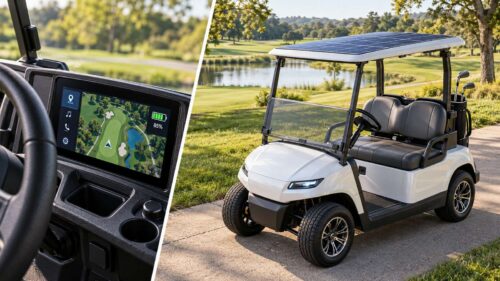





Before you load up the cooler, grab the sunglasses, and cruise the neighborhood, your golf cart deserves a quick summer checkup.
After sitting through the off-season — or even after lighter use during the colder months — your cart may need a little attention before it’s ready for long rides, weekend trips, campground cruising, lake days, or neighborhood fun. A few simple checks now can help prevent dead batteries, uneven tire wear, charger problems, loose accessories, or surprise breakdowns right when you actually want to use your cart.
Use this golf cart summer prep checklist to make sure your batteries, tires, charger, lights, seats, windshield, lift kit, and accessories are ready for peak riding season.
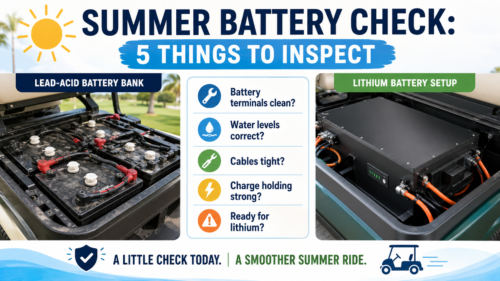
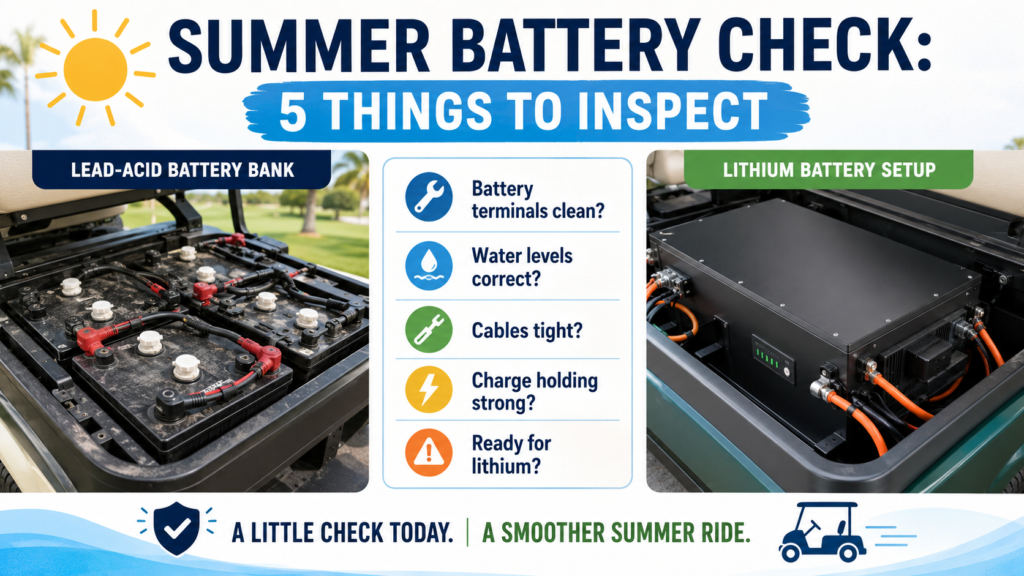
1. Check Your Golf Cart Batteries First
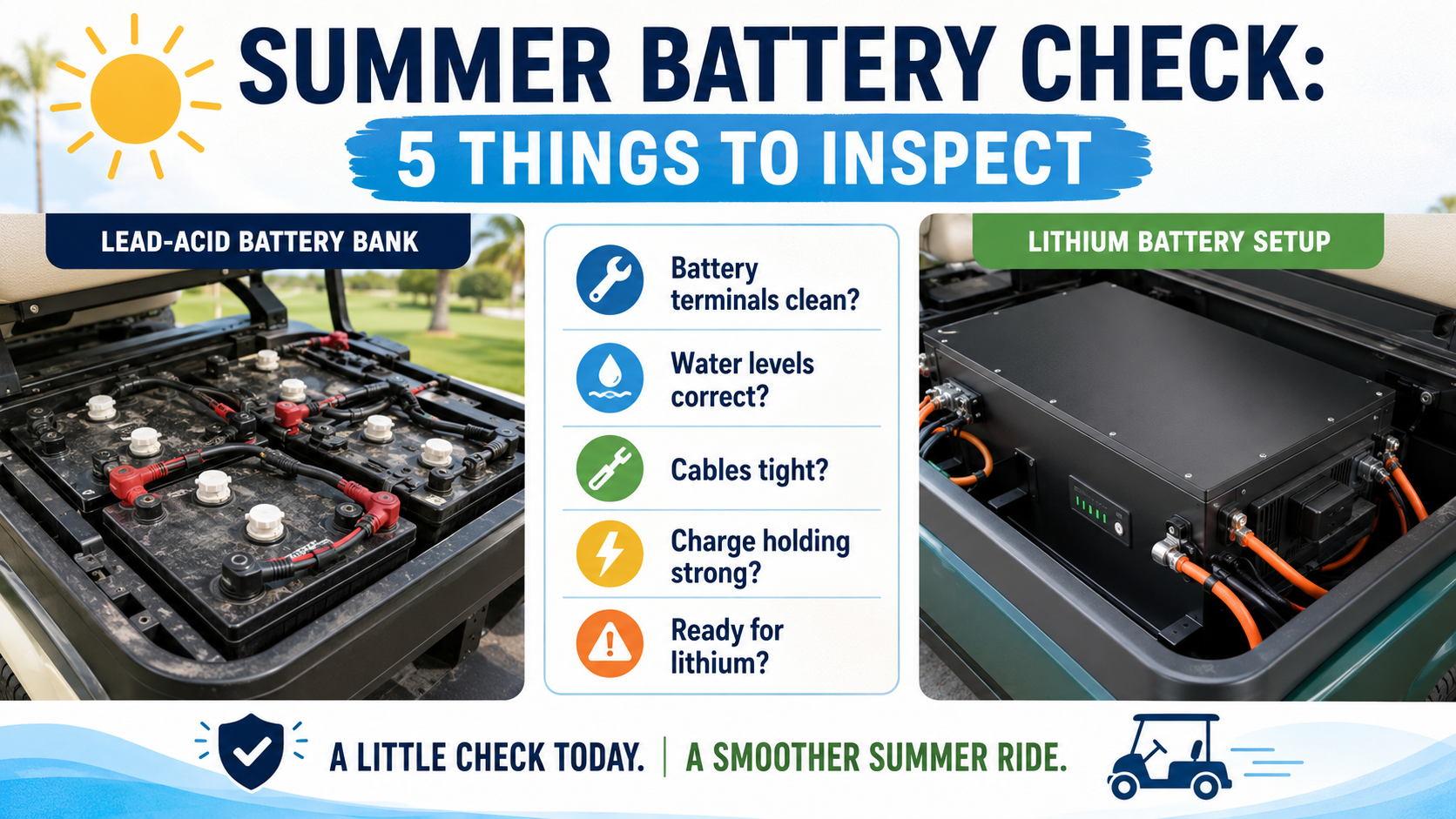
Your batteries are the heart of your electric golf cart, so this is the best place to start. If your cart feels sluggish, loses power quickly, struggles on hills, or takes longer than usual to charge, your batteries may be the issue.
For traditional lead-acid batteries, check:
- Water levels
- Corrosion on terminals
- Loose or damaged battery cables
- Swollen or cracked battery cases
- Uneven charging
- Shorter run time than usual
Battery water should only be filled with distilled water, and you should avoid overfilling. If the plates are exposed, the batteries may already be stressed or damaged.
If you’re tired of watering batteries, cleaning corrosion, and worrying about run time, summer is also a great time to consider upgrading to lithium golf cart batteries. Lithium battery kits can reduce maintenance, remove a lot of battery weight, and offer more consistent power compared to aging lead-acid packs.
Learn more in our guide to Lithium Golf Cart Battery Conversion Kits and Installation Tips, or check out our comparison of the Top 5 Lithium Golf Cart Batteries.
2. Test Your Battery Charger Before You Need It
A weak battery pack and a failing charger can look a lot alike. Before blaming the batteries, make sure your charger is actually doing its job.
Plug the cart in and check:
- Does the charger turn on normally?
- Are the indicator lights working?
- Does it complete a full charge cycle?
- Are the cords, plug, and receptacle in good condition?
- Does the charger get unusually hot?
- Is the charger compatible with your battery type and voltage?
If you recently upgraded to lithium batteries, do not assume your old charger is compatible. Lithium batteries typically need a charger with the correct charging profile.
Pete’s Golf Carts carries golf cart batteries and chargers, including options for 36V, 48V, and 72V systems. You can also browse USA Made Pro Charging Systems if you’re looking for a reliable charger upgrade.
For more charger education, check out our post on the difference between old-style golf cart battery chargers and newer chargers like the Lester Summit Series II.
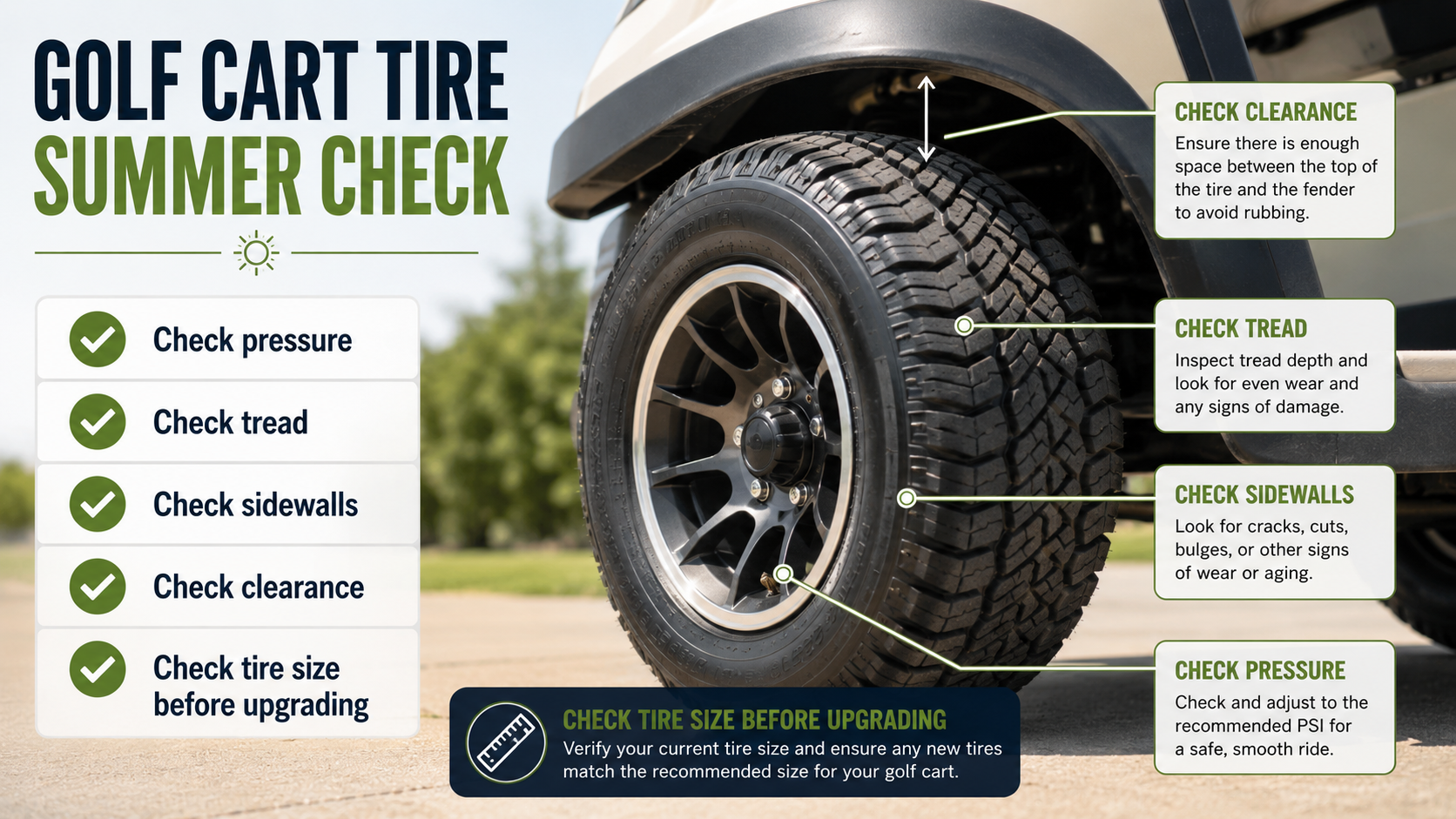
3. Inspect Your Tires for Wear, Cracks, and Proper Fitment
Tires are easy to overlook until there’s a problem. Before summer riding season, take a few minutes to inspect all four tires closely.
Look for:
- Low tire pressure
- Dry cracking
- Uneven wear
- Bulges or sidewall damage
- Nails, screws, or slow leaks
- Rubbing around the fenders or suspension
- Tread that no longer matches your riding style
If you mostly drive on pavement, street or turf-style tires may be the best fit. If you ride around campgrounds, trails, gravel, or uneven property, an all-terrain tire may make more sense. If your cart is street-legal or used on public roads, DOT-approved tires may be required depending on your area.
Thinking about changing sizes? Be careful — not every golf cart can run larger tires without a lift kit. For example, many stock carts can handle smaller 18–20 inch tire setups, but larger 22–25 inch tires usually require a lift kit.
Pete’s Golf Carts has a wide selection of golf cart wheels and tires, including street, turf, all-terrain, and lifted cart options. If your cart already has a lift kit, browse our lifted golf cart wheels and tires for larger tire and wheel combos.
Not sure what size fits? Start with our Ultimate Golf Cart Wheel and Tire Guide.
4. Make Sure Your Brakes Feel Solid
Summer usually means more passengers, more hills, more stops, and more neighborhood cruising. That makes your brakes even more important.
Before peak season, test your brakes in a safe, open area. Pay attention to:
- Spongy brake pedal feel
- Grinding or squeaking
- Pulling to one side
- Longer stopping distance
- Parking brake not holding
- Brake pedal sitting too low
If something feels off, do not ignore it. A golf cart carrying passengers, coolers, beach gear, or cargo needs to stop safely and predictably.
This is especially important if you’ve recently added larger tires, a rear seat kit, a cargo box, or other accessories that add weight.
5. Check Lights, Turn Signals, Horn, and Mirrors
If you ride at dawn, dusk, night, or around public roads, lights and safety accessories are a must.
Before summer, check:
- Headlights
- Taillights
- Brake lights
- Turn signals
- Horn
- Side mirrors
- Rearview mirror
- Reflectors
- Seat belts, if equipped
If your lights are dim, flickering, or not working at all, the issue may be a bulb, LED unit, wiring connection, fuse, voltage reducer, or switch.
For carts used in neighborhoods or communities, upgrading to a complete light kit can make the cart safer and more functional. Pete’s Golf Carts carries golf cart light kits and accessories for popular Club Car, EZGO, and Yamaha models.
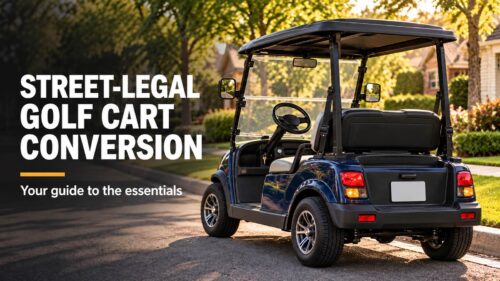
If you’re trying to make your cart road-ready, check out our blog post: Driving Your Golf Cart Beyond the Course: Your Roadmap to Street-Legal Freedom.
6. Look Over Your Windshield, Roof, and Seats
Comfort matters — especially when the cart becomes the unofficial summer shuttle.
Inspect your windshield for:
- Cracks
- Scratches
- Loose hardware
- Cloudy visibility
- Worn folding hinges
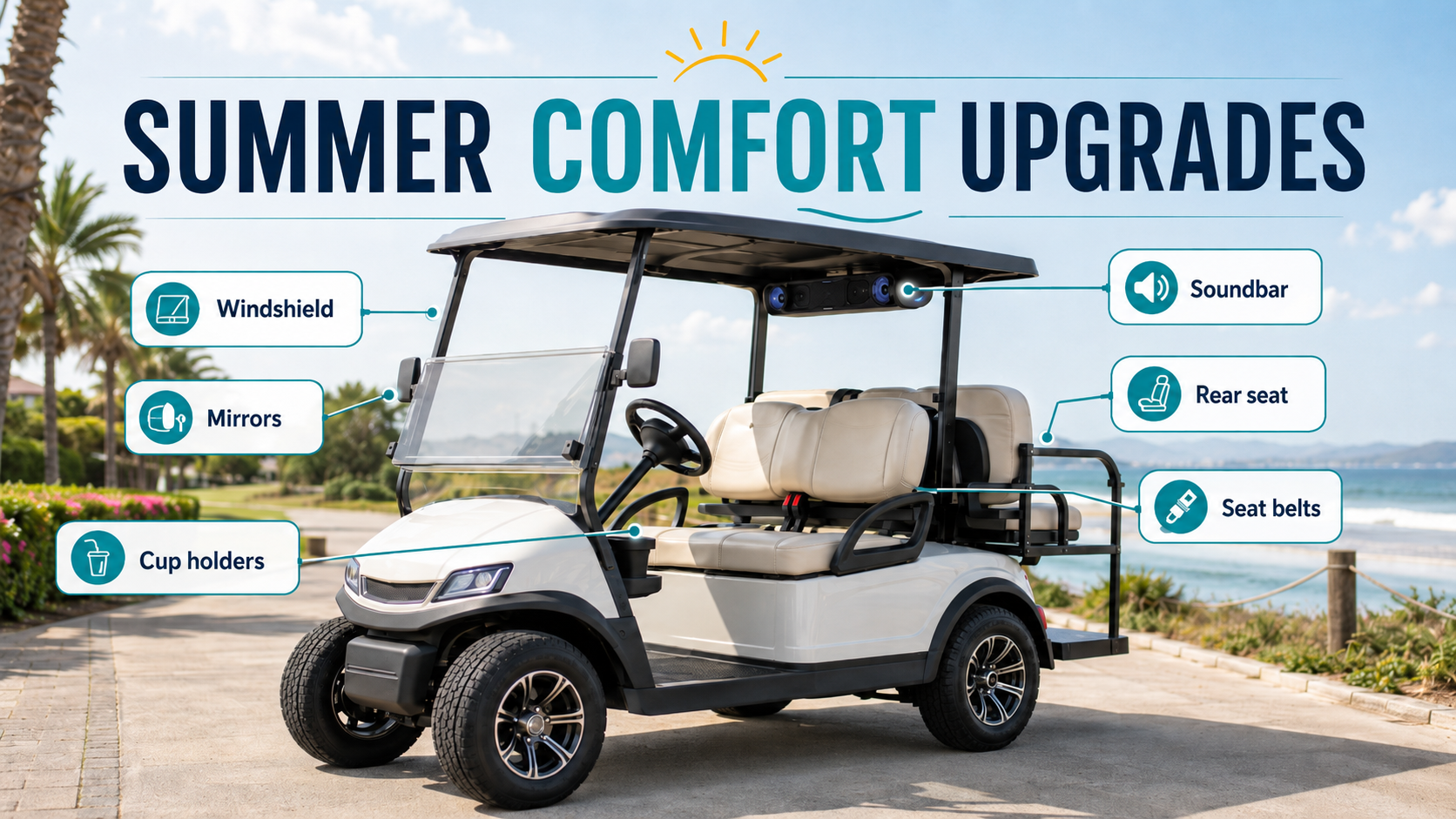
A folding windshield is great for airflow, but it should still latch securely and stay in place while driving.
Next, check your seats. Look for loose cushions, worn hinges, torn vinyl, rusted brackets, or unstable rear seat footrests. If your cart has a rear flip seat, make sure the grab bar, footplate, and mounting hardware are tight.
If your seats are faded, cracked, or uncomfortable, summer is a perfect time to upgrade with replacement cushions, custom seat covers, or a full rear seat kit.
You can browse Pete’s selection of golf cart replacement parts and accessories to freshen up your cart before the season gets busy.
7. Inspect Lift Kit, Suspension, and Steering Components
If your cart is lifted, has larger tires, or gets used off-road, give the suspension a close look before summer.
Check for:
- Loose bolts
- Worn bushings
- Sagging leaf springs
- Leaking shocks
- Steering play
- Uneven ride height
- Tires rubbing under load
- Unusual clunks or rattles
Lifted carts naturally put more stress on steering and suspension components, especially when paired with larger wheels and tires. If your cart feels loose, wobbly, or unstable, inspect everything before loading it up with passengers.
If you’re planning to upgrade to larger tires, you may need a lift kit first. Pete’s Golf Carts carries Club Car lift kits, EZGO lift kits, Yamaha lift kits, and popular styles like spindle lift kits and A-arm lift kits.
8. Clean the Cart and Tighten the Small Stuff
A good wash does more than make your cart look better. It also helps you spot small problems before they turn into bigger ones.
After cleaning the cart, check:
- Loose bolts and screws
- Rattling trim pieces
- Worn floor mats
- Loose cup holders
- Damaged dash parts
- Rust around brackets
- Frayed wiring
- Missing caps or covers
Pay special attention to carts that spent the winter in storage, outside, near water, or in dusty garage conditions.
This is also a great time to check your accessories and decide what would make the cart more useful this summer: storage trays, mirrors, grab bars, seat belts, speakers, coolers, cargo baskets, or a rear seat kit.
9. Take a Short Test Drive Before the First Big Ride
Once everything checks out, take your golf cart for a short test drive close to home.
Listen and feel for:
- Strange noises
- Hesitation
- Pulling
- Vibration
- Brake issues
- Steering looseness
- Loss of power
- Tire rubbing
- Charger or battery warning signs after the ride
Don’t wait until the first lake weekend, campground trip, family visit, or Fourth of July cruise to find out something isn’t right. A quick test drive can save a lot of frustration.
Get Your Golf Cart Summer-Ready with Pete’s Golf Carts
A little prep now can make your summer rides safer, smoother, and a lot more fun. Whether you need new batteries, a charger, tires, wheels, a lift kit, light kit, windshield, rear seat, or replacement parts, Pete’s Golf Carts has you covered.
Shop popular summer upgrade categories:
- Golf Cart Wheels and Tires
- Lifted Golf Cart Wheels and Tires
- Golf Cart Batteries and Chargers
- Golf Cart Lift Kits
- Club Car Golf Cart Accessories
- Golf Cart Replacement Parts and Accessories
Need help figuring out what fits your cart? Contact Pete’s Golf Carts with your cart make, model, year, tire size, and battery voltage, and we’ll help point you in the right direction.
Your summer cart adventures are calling — make sure your cart is ready to answer.
FAQ: Golf Cart Summer Prep
How do I get my golf cart ready for summer?
Start by checking the batteries, charger, tire pressure, brakes, lights, windshield, seats, steering, and suspension. Then take a short test drive before using the cart for longer rides.
How often should I check my golf cart batteries in the summer?
For lead-acid batteries, check water levels and terminals regularly, especially during heavy use. Lithium batteries require much less routine maintenance, but you should still monitor charge level, charger compatibility, and battery connections.
Should I replace my golf cart tires before summer?
Replace your tires if they are cracked, worn unevenly, leaking, bulging, or no longer suitable for how you use the cart. If you’re upgrading tire size, confirm fitment before ordering.
Do larger golf cart tires need a lift kit?
Sometimes. Many stock-height carts can fit smaller tire upgrades, but larger 22-inch, 23-inch, or 25-inch tires usually require a lift kit. Fitment depends on cart model, year, tire size, tread style, and suspension condition.
What are the best golf cart upgrades for summer?
Popular summer upgrades include lithium batteries, new wheels and tires, rear seat kits, windshields, light kits, mirrors, seat belts, storage accessories, and lift kits.