




*UPDATED September 2026
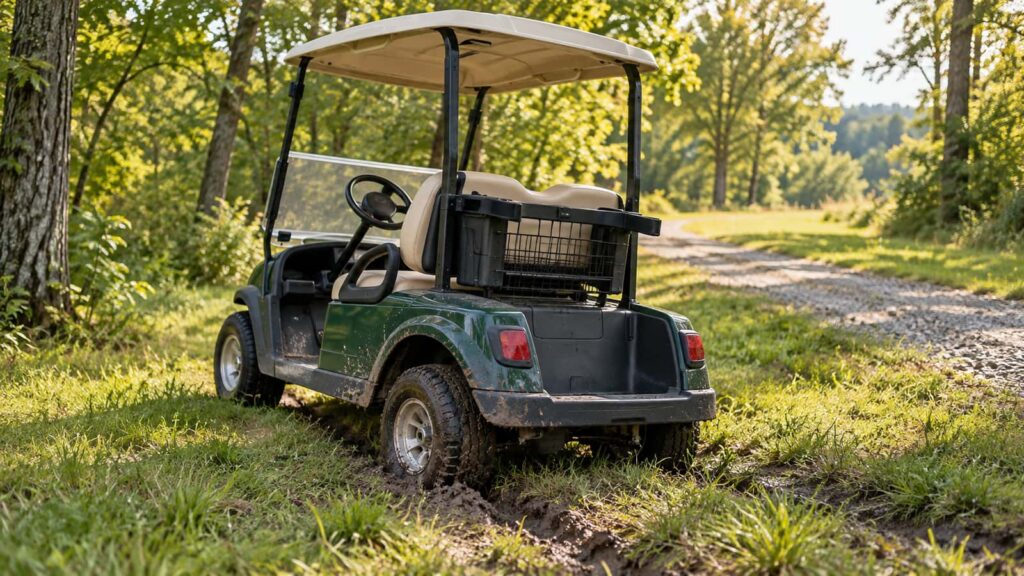
That shortcut looked a lot drier from the driver’s seat, didn’t it?
One minute you’re cruising along. The next, your tires are spinning, your cart isn’t moving, and you’re wondering whether another little push on the pedal will do the trick.
Take your foot off the accelerator for a second. More wheelspin usually means more digging—and your golf cart has already done enough landscaping.
If your golf cart is stuck in mud or sand, start by checking that it’s stable, removing unnecessary weight, and giving the tires a clearer path to firm ground. Sometimes a little shovel work or something grippy under the tires is all you need.
Let’s work through the options, including a few useful tricks you might already have supplies for.
First, take a look at what you’re dealing with
Before anyone starts pushing, digging, or rummaging around for a tow strap, check the cart and its surroundings.
These tips are for a shallow stuck on reasonably level, stable ground. Stop and get recovery help if the cart is leaning, sliding, resting on its underside, buried around the axles, or sitting near a ditch, drop-off, or water.
Also check the route out. Getting free won’t help much if you immediately drive into a deeper patch.
Before placing anything near the wheels, turn the cart off, remove the key, and secure it against movement using the procedure for your model. Keep children, pets, and spectators well away from the recovery area.
On a golf course? Call the staff first. They know the property, may have suitable equipment, and will appreciate having a say before anyone starts excavating the fairway.
1. Give the cart a little less to carry
With the cart safely secured, have passengers step onto firm ground and remove accessible cargo.
Golf bags, coolers, tools, and that collection of “we might need this someday” items can wait off to the side.
Keep the driver properly seated whenever the cart is being driven. Don’t ask someone to stand on the rear platform, bounce on the bumper, or lean out to add traction. A recovery attempt needs predictable weight and balance.
2. Consider backing out the way you came
Your best exit might be right behind you.
If the ground you just crossed is firmer than the ground ahead, a gentle reverse attempt may get you out without traveling farther into the soft spot.
Choose a clear route and keep the front wheels as straight as that route allows. Sharply turned wheels can make the cart work harder to move through soft ground. Straightening the wheels and considering a reverse exit are also part of AAA’s reduced-traction advice.
Use light, steady pedal pressure. If the tires spin without moving the cart, stop and improve the situation before trying again.
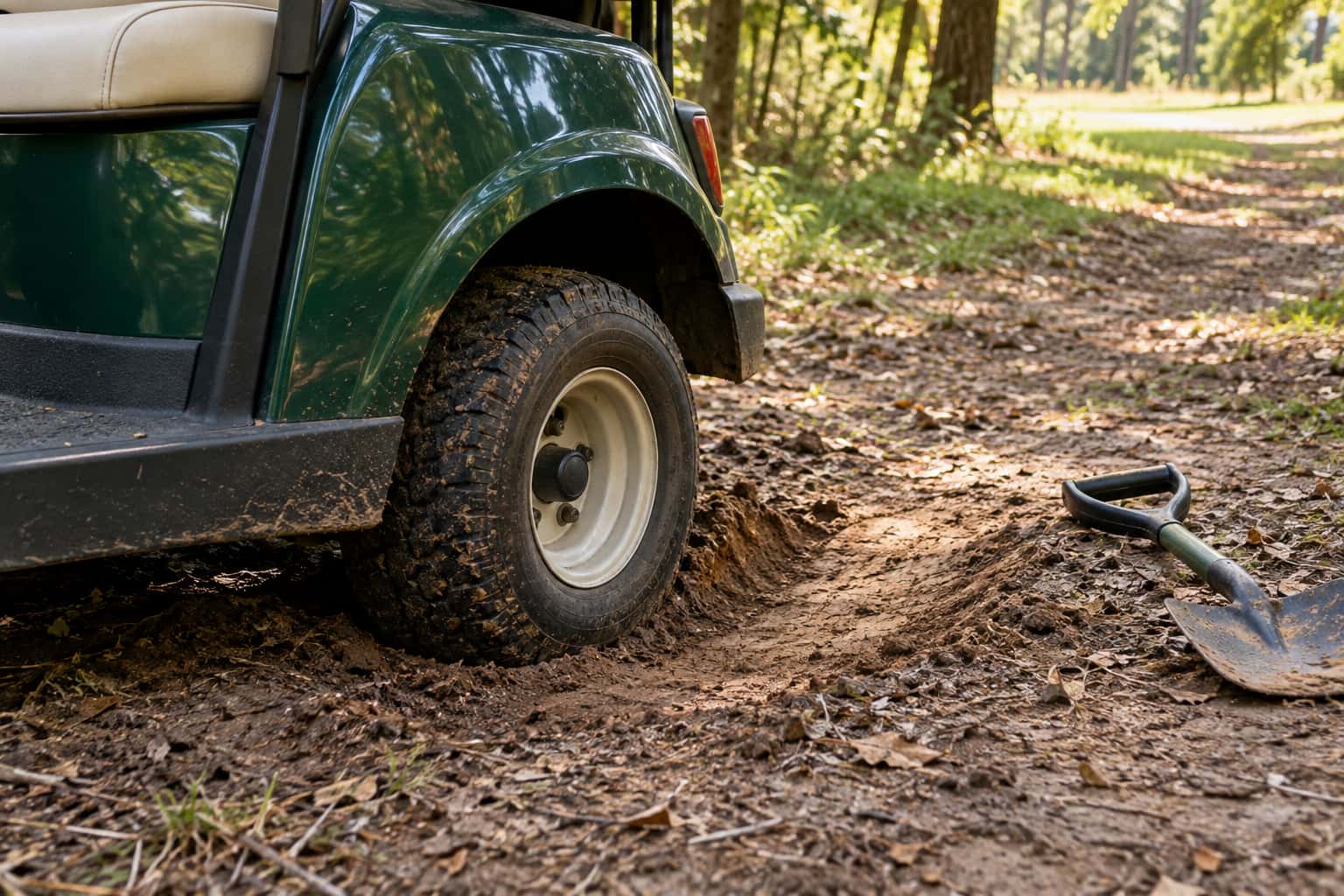
3. Dig an exit path—not a deeper parking spot
A small shovel can accomplish quite a bit here.
Remove the ridge of mud or sand directly in the tires’ intended path. Shape a shallow, gradual exit instead of leaving a steep wall for the tire to climb.
Check the path for all four tires. Even if only one is spinning, the others may be pushing against little piles of mud or sand.
Avoid scooping out the ground supporting the tires, and don’t pile the loose material right back into your escape route. Work from beside the cart without crawling underneath it.
If the cart’s underside is resting on the ground, stop. That’s a different recovery problem, and adding more accelerator won’t put the weight back onto the tires.
4. Put traction boards to work
Purpose-made traction boards can give tires something firmer to grip in soft ground.
Choose boards suitable for your cart’s weight, tire size, tread, and terrain. That last part matters: some boards are designed to engage aggressive off-road tread and aren’t recommended for shallow street-tire patterns. MAXTRAX explains that distinction in its tire-compatibility guidance.
With the cart secured, place the boards according to their instructions and your intended direction of travel. Everyone should move clear before the driver makes a gentle attempt.
If the tires don’t grip, stop and reposition. Spinning the tires can damage the boards and throw material. Don’t use traction boards to bridge a ditch or support a raised cart unless that specific product is designed for it. These manufacturer instructions explain the limits.
5. No traction boards? A spare mat might help
Here’s the slightly unconventional option you may already have nearby: a spare floor mat, short carpet scrap, or sturdy piece of cardboard.
Roadside advice from the AA includes mats and cardboard as possible traction aids. For a golf cart, think of this as an option to consider for a minor loss of grip, rather than a solution for deep mud or a buried vehicle.
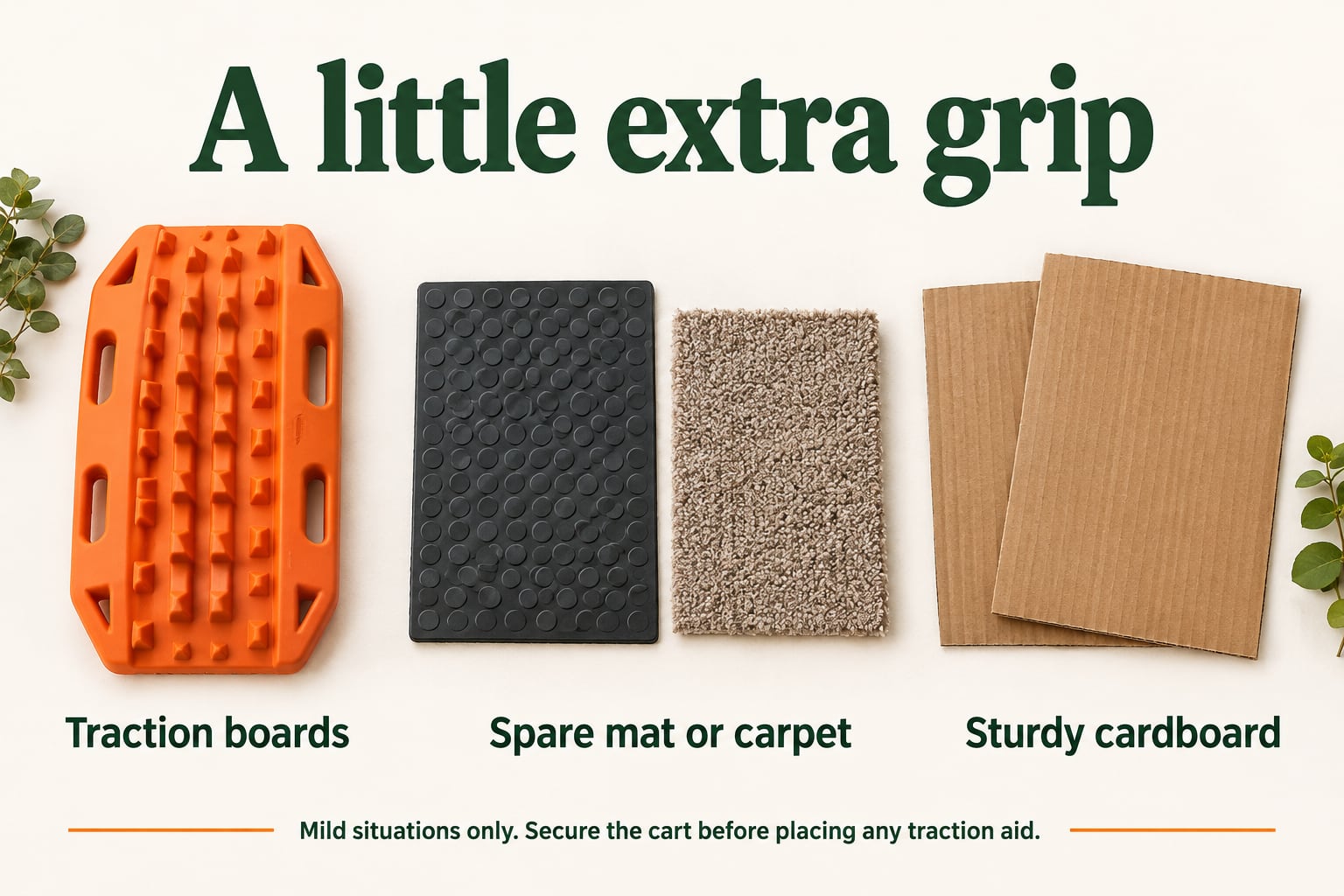
A few practical limits:
- Use a short, flat piece without loose cords or straps that could catch in moving parts.
- Position it with the cart off and secured.
- Nobody should hold or adjust it while the tires are turning.
- Keep everyone clear of the wheels and the direction the material could be thrown.
- Stop if it slips, bunches up, or starts getting pulled into the cart.
Cardboard won’t last long once it’s soaked, and your mat may come back looking considerably less presentable. Save the nice welcome mat.
6. Try a little grit for a small slippery patch
Sometimes the problem is a slick surface rather than a deep hole.
On a small, firm patch covered with slippery mud—or a little ice—traction grit or coarse sand may help give the tire something to bite into. AAA also discusses loose traction materials in its guidance for getting out of a slippery spot.
This has limits. A handful of grit won’t turn deep mud into solid ground, and adding sand to a cart already buried in sand isn’t much of a plan.
Use material permitted on the property, keep it away from drains and waterways, and clean up what you bring in. Skip large rocks, sharp debris, and loose objects that could become projectiles.
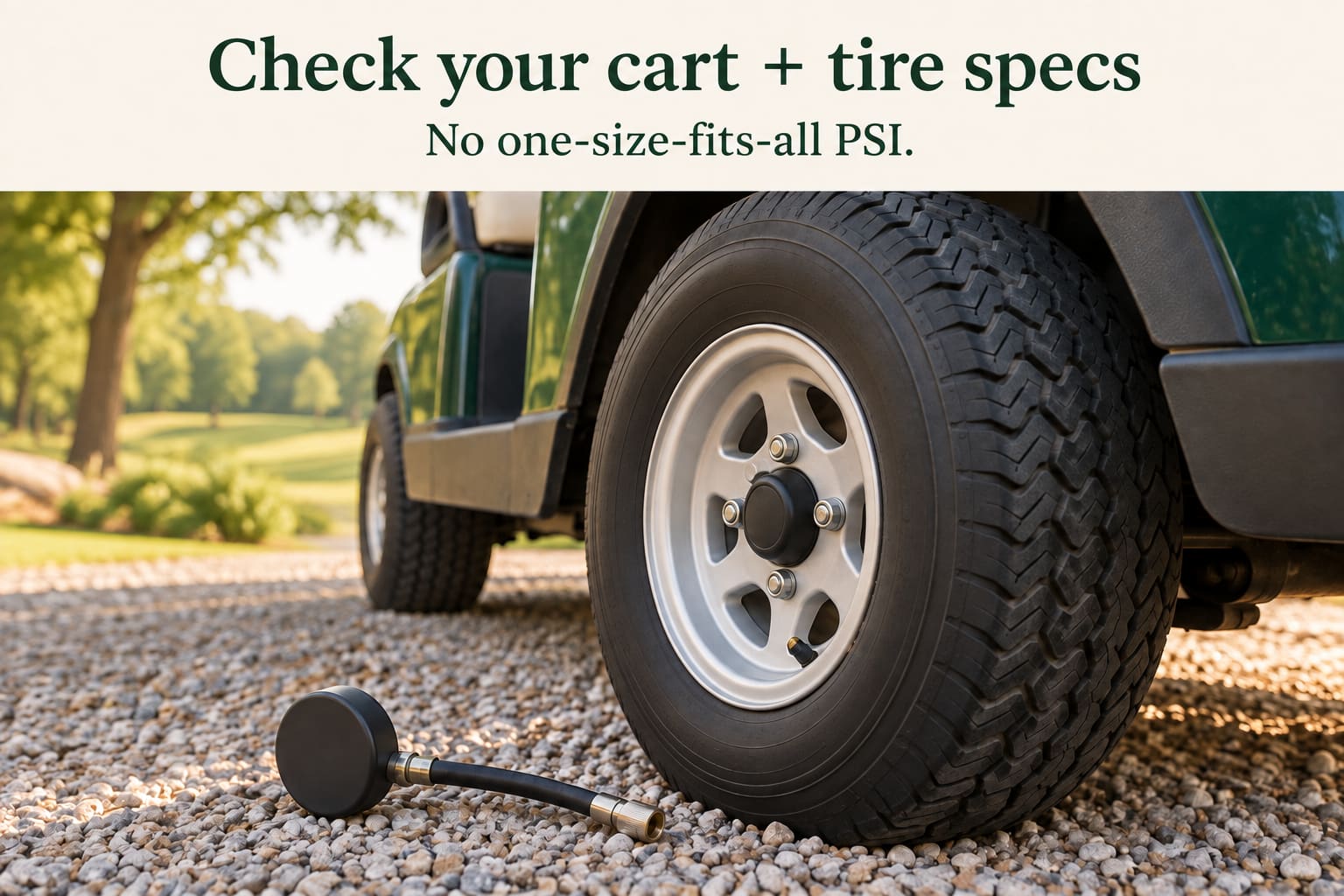
7. Check tire pressure—but skip the guessing game
You’ve probably heard that letting air out of the tires helps a vehicle get through sand.
That can apply to certain setups, but there isn’t one safe pressure—or one safe amount to release—for every golf cart.
Start with the guidance for your exact cart and tire combination. If the manufacturer provides a pressure range for different conditions, stay within that approved range. If you have aftermarket tires, confirm the appropriate pressure with the tire supplier or manufacturer.
Don’t automatically use a sidewall marking labeled “maximum” as your operating target. Michelin explains the difference between a tire’s maximum pressure and the vehicle’s recommended pressure.
Any approved adjustment needs a reliable gauge and a way to restore the correct operating pressure before normal driving. If you can’t confirm what’s appropriate, leave the pressure within the approved specification and work on the exit path and traction instead.
Not sure exactly which cart you have? Our golf cart make, model, and year identification guide is a useful starting point.
8. Make the next attempt count
Once you’ve cleared a path or improved traction, try a short, gentle attempt in your chosen direction.
You may find that a little movement backward creates room for a better forward attempt. However, bring the cart and its wheels to a complete stop before changing direction, and follow your model’s operating instructions. E-Z-GO specifically calls for a complete stop before moving the direction selector in its RXV owner’s manual.
Avoid repeatedly shuttling between forward and reverse to build speed. Don’t bounce the cart or try to launch it over the rut.
If you’re only getting wheelspin, stop. Something needs to change before the next attempt: the path, the traction, or the recovery plan.
9. Sometimes the useful trick is taking a break
If the cart is safely parked on private property, isn’t blocking access, and the owner agrees, waiting for conditions to improve may be worth considering.
That doesn’t mean sitting beside it hoping deep mud will magically disappear. It means deciding whether returning with proper traction equipment—or letting a temporary wet patch dry—is more sensible than another unproductive attempt.
Use the pause to gather better tools, contact someone familiar with your cart, or arrange recovery.
Your cart doesn’t care who wins the argument with the mud.
When it’s time to call for recovery help
Call the course staff, property manager, golf cart service shop, or a recovery operator when:
- The cart is tilted, sliding, deeply buried, or resting on its underside.
- You don’t have a clear, stable exit route.
- A tire is damaged or coming off the rim.
- You notice unusual noises, a burning smell, or a warning light.
- Gentle attempts aren’t producing progress.
Tell the person helping you the cart’s make and model, whether it’s gas or electric, and what it’s stuck in. Send a photo from a safe location if possible.
A winch or professional recovery setup may be the right answer, but the attachment points, equipment, and pulling method must suit the cart. Don’t attach a rope to a roof support, rear-seat frame, or whatever happens to look sturdy.
Towing instructions also vary. A Run/Tow switch may affect braking, and some carts require specific towing equipment. Follow the exact manual rather than assuming “key off” or “Tow mode” makes any recovery method acceptable. The E-Z-GO RXV manual, for example, gives different instructions for different configurations.
You’re out! Give the cart a quick once-ove
Once you reach firm, level ground, secure the cart and check for obvious damage.
Look at the tires, wheels, and any areas that contacted the ground. Follow the manufacturer’s cleaning instructions, keeping pressure washers away from electrical components and other sensitive areas.
Make sure the steering and brakes work normally before continuing. If anything feels different, stop and have it checked.
Our golf cart maintenance checklist can help you work through the rest of your routine checks.
And yes, this is a good time to retrieve the cooler.
Make the next muddy surprise a little easier
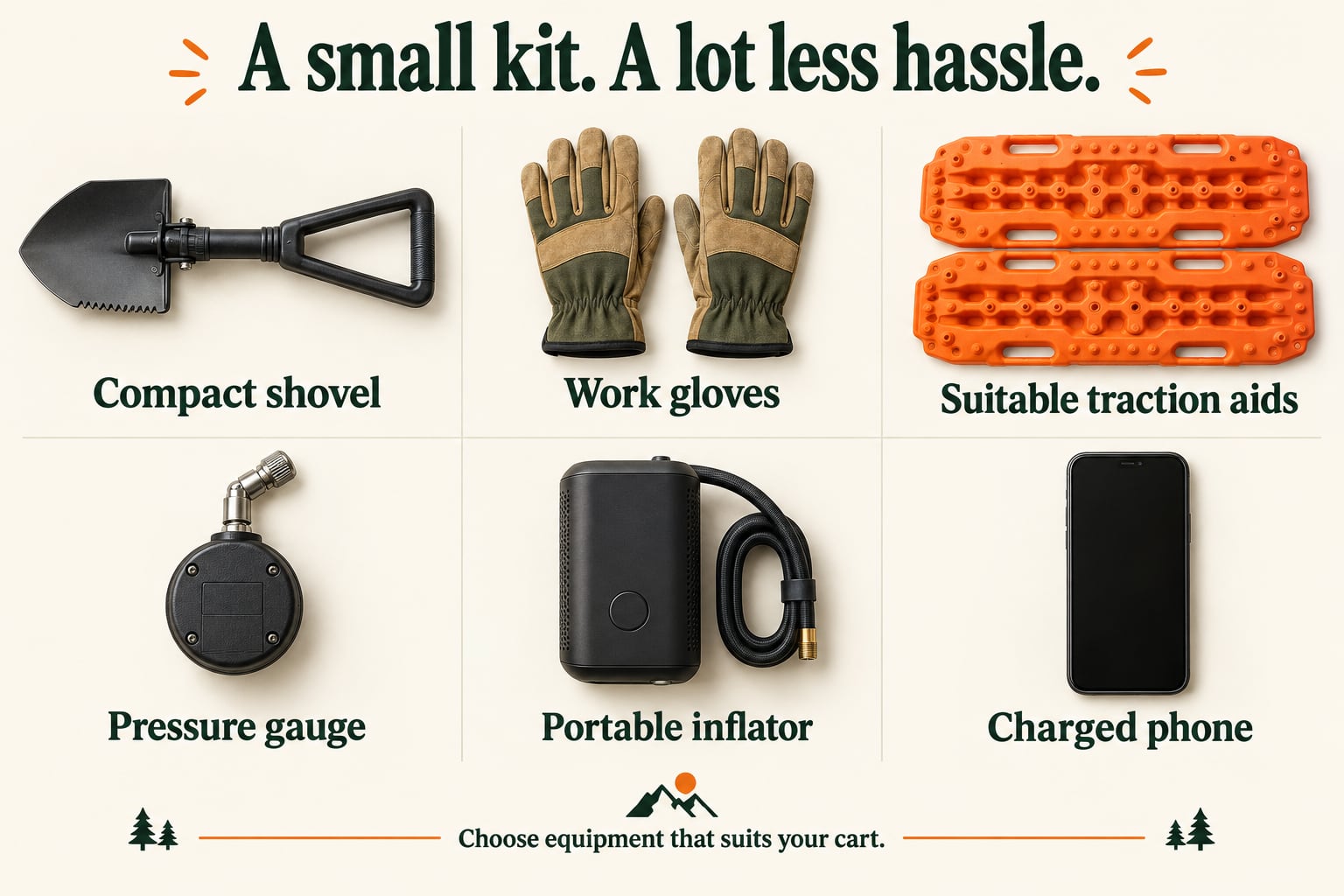
You don’t need to turn your cart into a rolling recovery truck. A compact shovel, gloves, suitable traction aids, a tire-pressure gauge, and a charged phone can make a useful little kit.
It also helps to choose tires for where you actually drive. If most of your trips include soft ground, our golf cart wheel and tire guide explains the main options and fitment considerations.
Considering a lift? Start with our guide to golf cart lift-kit types. A lift can change clearance and handling, but it doesn’t guarantee traction or make deep mud safe to cross.
The easiest recovery is still the one you don’t need. When that shortcut looks questionable, taking the longer route is a perfectly good golf cart upgrade.
One last question: Why is only one tire spinning?
On a cart equipped with an open differential, one drive tire can spin on a slippery patch while the other barely moves. That behavior alone doesn’t mean the axle is broken. Eaton explains how open differentials behave when traction is uneven.
For recovery, it’s a clue to inspect the ground beneath the spinning tire and improve its traction with the cart safely secured. Don’t try to grab, block, or load a turning wheel.
A clearer path, better grip, and a gentle touch can go a long way. And when they don’t, making the call for help is a whole lot better than making the hole bigger.