




The popularity of street-legal golf carts and low-speed vehicles (LSVs) has exploded in recent years. They are no longer just for the course—they are neighborhood cruisers, beach shuttles, and even farming utilities.
However, the laws governing where you can drive them vary wildly from state to state. At Pete’s Golf Carts, we want to make sure you stay on the right side of the law. This guide has been updated for 2025 with the latest legislative changes across the country.
⚠️ IMPORTANT DISCLAIMER: This information is for educational purposes. Laws change frequently and local ordinances can be stricter than state laws. Always check with your local DMV or municipal court before hitting the road.

Quick Reference: What Makes a Cart “Street Legal”?
Before we dive into state-by-state specifics, most states agree on a baseline for legal road use. Generally, to drive on public roads (where permitted), your cart should have:
- Working brakes and a reliable steering apparatus
- Headlights (white light visible from 500 ft)
- Tail lights and brake lights (red light visible from the rear)
- Turn signals
- Rearview mirror(s)
- Red reflectorized warning devices (front and rear)
- Windshield (if driving at night in many states)
- Slow-moving vehicle emblem (orange triangle)
- Valid registration and liability insurance
- Valid driver’s license (operator requirement)
2025 State-by-State Legislative Updates
Several states have passed or amended laws in 2025 that affect golf cart owners. Here are the highlights:
Florida
Status: Active Statutes (2025 Edition)
Florida remains one of the most golf cart-friendly states, but the rules are specific.
- Where you can drive: Golf carts are generally prohibited on public roads unless designated by a local government (county or municipality). They may cross parts of the State Highway System only with DOT approval.
- Designated Roads: Local entities must post signs indicating golf cart operation is allowed after considering traffic speed, volume, and character.
- Night Operation: Operation between sunset and sunrise requires headlights, brake lights, turn signals, and a windshield. Otherwise, operation is limited to daytime hours .
- Age Requirements: Operators under 18 must have a learner’s permit or valid license. Operators 18 or older must possess a valid government-issued photo ID .
- Equipment: Must have efficient brakes, steering, tires, rearview mirror, and red reflectorized warning devices front and rear .
Illinois
Status: 2025 Legislative Updates (SB1245 & HB3862)
Illinois has made significant moves in 2025 to clarify the rules for “non-highway vehicles,” including golf carts.
- General Rule: It is unlawful to operate a non-highway vehicle (including golf carts) on any street, highway, or roadway unless authorized by local ordinance .
- Local Control: Municipalities, townships, and counties may authorize operation on roads under their jurisdiction (speed limit 35 mph or less) if public safety is not jeopardized. The Department of Natural Resources can now also authorize operation on its roadways .
- Required Equipment (Minimum): Brakes, steering, tires, rearview mirror, red reflectorized warning devices front and rear, slow-moving emblem, headlight (500 ft visibility), tail lamp (100 ft visibility), brake lights, and turn signals .
- Insurance: Mandatory insurance is required (minimum coverage under Article VI of Chapter 7) .
- Farming Exemption: Operation on county/township roads for farming purposes is allowed with fewer equipment requirements, but night operation requires lights .
Louisiana
- Definition: A golf cart is an electric four-wheeled vehicle originally intended for off-road use with a maximum speed of 25 mph .
- Local Designation: Operation is prohibited except on parish roads or municipal streets specifically designated by the local government and posted with signs .
- Equipment: Must have brakes, steering, tires, rearview mirror, red reflectorized warning devices front/rear, plus headlamps, front/rear turn signals, tail lamps, and brake lamps .
- Registration: Must be registered with the state as an off-road vehicle and display a decal from the Office of Motor Vehicles .
- Insurance: Liability insurance is required (minimum limits per R.S. 32:900(B)) .
- Driver’s License: A valid driver’s license is mandatory .
Mississippi
Status: House Bill 265 (2025 Regular Session)
Mississippi updated its laws to expand county authority regarding golf cart operation.
- New Authority (Effective July 1, 2025): The Board of Supervisors of any county may now authorize golf cart and low-speed vehicle operation on certain public roads within the corporate limits of the county .
- Roads: Operation is allowed on roads where bicycles are authorized. Carts must stay in the outside lane on multilane roads .
- Prohibitions: Cannot operate on state or federal highways (except to cross, using the shortest distance) .
- Registration: Requires registration with the city or county, a registration decal displayed on the left rear fender, and a map of approved areas provided to the registrant .
- Requirements: Valid driver’s license and proof of financial responsibility must be in possession at all times .
South Carolina
Status: Act No. 64 of 2025 (Effective May 22, 2025)
South Carolina passed a major overhaul of its golf cart laws in 2025, and local authorities are already enforcing it.
- NEW: Statewide Registration: Golf carts must now be registered with the South Carolina DMV, not just local municipalities. The fee is $5, and the permit decal must be renewed every five years .
- NEW: Child Passenger Safety: This is a significant update. All passengers under the age of 12 must wear a fastened seat belt when the golf cart is operated on public streets and highways. Violators face a $25 fine .
- Operator Age: Operators must be at least 16 years old and have a valid driver’s license .
- Operational Limits (Default Rules):
- Prohibited: Open containers of alcohol are illegal, and DUI laws apply to golf cart operators .

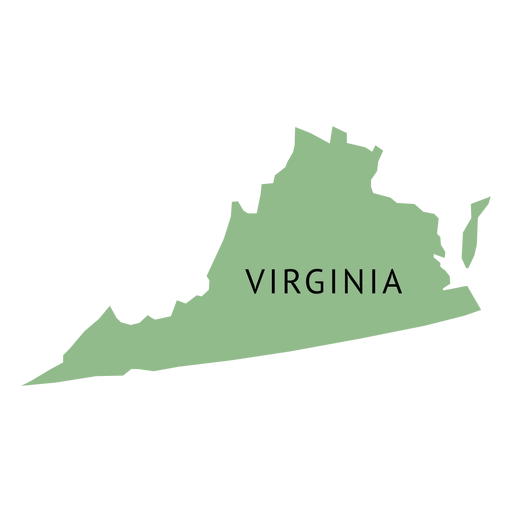
Virginia
Status: Code of Virginia § 46.2-916.2
- Local Designation: No public highway may be used by golf carts unless the governing body of the county, city, or town has reviewed and approved it by ordinance .
- Considerations: Localities must consider traffic speed, volume, and character, and ensure compatibility with transportation plans and pedestrian policies .
- Town Restriction: Towns without their own police department generally cannot authorize golf cart operation (with specific statutory exceptions for certain towns) .
- Speed Limit: Operation is limited to highways with speed limits of no more than 35 mph .
- Signage: The authorizing locality is responsible for installing and maintaining all signage at its own cost .
General Safety Guidelines & Best Practices
Even where the law is silent, smart operators follow these rules:
- Night Riding: If you plan to drive after dark, ensure your cart is equipped with a full lighting package. Many states (like Florida) require specific equipment for nighttime operation .
- Stay Local: Some states (like South Carolina) have specific mileage limits. Even if your state doesn’t, high-speed arterial roads are dangerous for low-speed vehicles. Stick to neighborhood streets.
- Check Local Ordinances: State law often sets the floor, not the ceiling. Your city or homeowners’ association may have stricter rules about where and when you can drive.
- No DUIs: Driving a golf cart under the influence of alcohol or drugs is treated the same as driving a car in virtually every jurisdiction .
Indiana
Indiana takes a local-control approach to golf cart regulation. State law (IC 9-21-1-3.3) permits local authorities to authorize golf cart operation on roads under their jurisdiction, but specific requirements vary by county and town.
State-Level Framework
- Definition: A golf cart is a four-wheeled motor vehicle originally designed to transport individuals and golf clubs on a golf course.
- Local Authorization: Counties, cities, and towns may pass ordinances allowing golf cart operation on public streets.
- Insurance: Financial responsibility (liability insurance) is required when operating on public roads.
- Driver’s License: Operators must hold a valid driver’s license.
- Time Restrictions: Many local ordinances restrict operation to between sunrise and sunset unless the cart has proper lighting.
Chesterfield, Indiana (New 2025 Ordinance)
The Town of Chesterfield passed Ordinance #2025-7, effective September 1, 2025, establishing detailed requirements for golf cart operation.
- Inspection Required: Carts must pass a one-time safety inspection by the Chesterfield Police Department ($10 fee) and display an inspection sticker.
- Equipment: Must have working brakes, parking brake, good tires, side or center rearview mirrors, and a standard-sized slow-moving vehicle emblem on the rear.
- Lighting: If operated after daylight hours, headlights and taillights are required.
- Insurance: Proof of insurance must be provided at inspection and carried on the cart at all times.
- Passenger Rules: All passengers must be seated; operators under 18 cannot have passengers under 16 unless a family member exception applies or an adult is present.
- Prohibited Areas: Operation is not allowed on state highways.
- Fines: Violations include $50 for lighting infractions and $25 for missing inspection stickers.
St. John, Indiana
The Town of St. John (Lake County) has established comprehensive regulations:
- Annual Registration: Required, with a $50 annual fee. Registrations expire December 31 each year.
- Insurance: Proof of insurance must accompany registration and be kept in the cart.
- Equipment: Slow-moving vehicle emblem required; if operating after dusk, headlights, taillights, and turn signals are mandatory.
- Where You Can Drive: Restricted to residential neighborhood streets with speed limits of 25 mph or less. Not allowed on bike or walking paths.
- Speed Limit: Maximum 25 mph.
Jasper County, Indiana
Jasper County regulations (Chapter 11.35) include:
- Annual Registration: $25 fee, handled through the Sheriff’s office. Registrations valid calendar year (Jan 1-Dec 31).
- Equipment Requirements: Brakes in good condition, rearview mirror, headlights, taillights, brake lights, turn signals, front and rear reflectors, horn, and slow-moving vehicle emblem.
- Passenger Restrictions: No one under 2 years old may ride; no one under 10 allowed on the back seat. All passengers must be seated while in motion.
- Time of Operation: Only between sunrise and sunset.
- Crossing Highways: May cross state highways at right angles to travel between county roads when safe.
- Fine: $200 for violations.

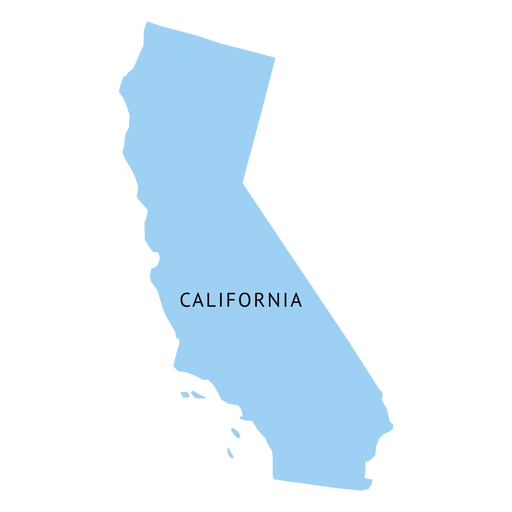
California
California has distinct rules distinguishing between standard golf carts and Low-Speed Vehicles (LSVs). Understanding this difference is crucial for legal operation.
Golf Carts vs. Low-Speed Vehicles (LSVs)
Golf Carts:
- Defined under California Vehicle Code §345 as vehicles designed to carry golfers and equipment (max 1,300 lbs) with top speed around 15 mph
- May only be operated on streets specifically permitted by ordinance or signage
- Generally not allowed on city streets or bike lanes except in designated “golf cart communities” (e.g., Deer Ridge, Shadow Lakes in Brentwood)
- Do not require DMV registration if used only on golf courses or in designated communities
- Not equipped with standard safety features like seat belts, lights, or mirrors
- Not recommended for transporting children on public streets due to lack of restraints
Low-Speed Vehicles (LSVs):
- Built to federal safety standards for roadway use; top speed between 20-25 mph
- Must be registered with the DMV, display license plates, and carry insurance
- Required safety features: seat belts for all passengers, headlights, taillights, turn signals, mirrors, windshield (automotive safety glass), parking brake, horn
- Allowed on streets with posted speed limits of 35 mph or less
- Vehicle must be capable of at least 20 mph to qualify as an LSV
Where You Can Drive in California
- Golf Carts: Only on roads with speed limits of 25 mph or less and within 1 mile of a golf course or in city-approved golf cart zones (CVC §21115)
- LSVs: On roads with speed limits up to 35 mph
- Golf Cart Communities: Some cities (Palm Desert, Rancho Mirage, Laguna Woods Village, Coronado) have infrastructure supporting golf cart transportation
Child Passenger Safety (California)
California law is strict about child passengers:
- In LSVs: Children under 8 must ride in a car seat or booster seat in the back seat, just as in a standard vehicle
- Seat belts must be used at all times in an LSV
- In Golf Carts: Not recommended for children on public streets; most carts lack seat belts or car seat anchors, making them unsafe for transporting small children
Registration Process for LSVs
To register a golf cart as an LSV with the California DMV:
- Complete Title or Registration form (REG 343)
- Provide proof of ownership and verified VIN
- Submit proof of insurance meeting California’s minimum liability standards
- Pay applicable registration fees
- Receive plates, registration card, and legal approval to drive
Insurance Requirements
- For LSVs: Mandatory liability insurance
- For Golf Carts (private use only): Insurance not required by state, but many owners opt for coverage
Need a Cart That Meets the Law?
Upgrading your cart to meet street-legal requirements is easier than you think. At Pete’s Golf Carts, we stock everything you need: LED light kits, turn signals, rearview mirrors, windshields, and safety kits to bring your cart into compliance.
Contact us today to make sure your custom build is legal and ready for the road in 2025!