





Imagine cruising quietly through your neighborhood, down to the local café, or around your beachside community in your very own golf cart. No longer confined to the fairways, a street-legal golf cart (often called a Low-Speed Vehicle or Neighborhood Electric Vehicle) offers unmatched convenience and fun. But before you hit the public road, there’s a crucial process to follow.
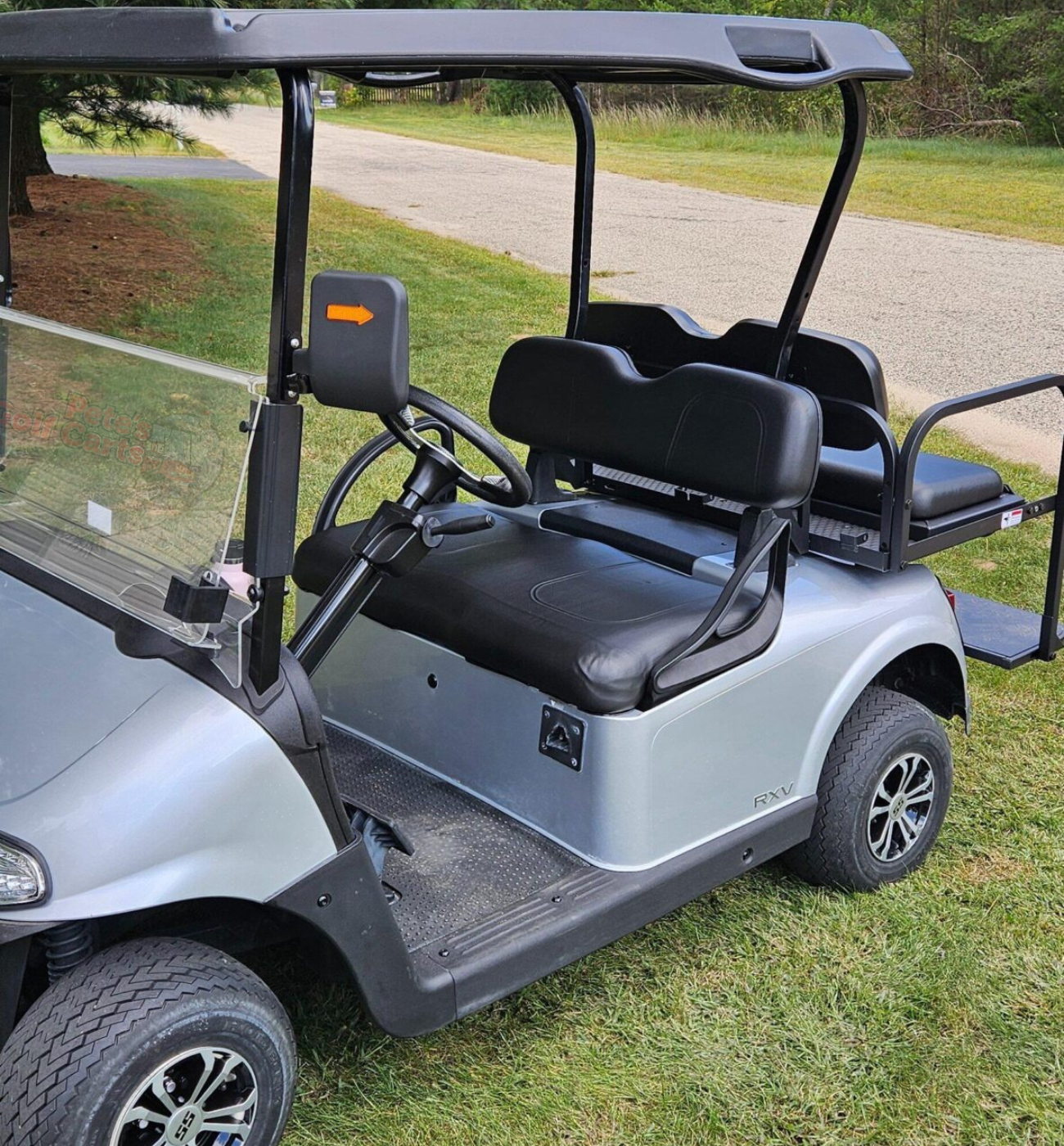
At Pete’s Golf Carts, we’ve helped countless enthusiasts like you make the transition. This comprehensive guide will walk you through everything you need to know about converting your standard golf cart into a fully certified, street-legal machine, highlighting the critical differences in state laws.
What Does “Street Legal” Actually Mean?
For a golf cart to become street-legal, you must reclassify it as a Low-Speed Vehicle (LSV) according to the Federal Department of Transportation (DOT). Federal Standard 500 sets the baseline requirements: the vehicle must reach a top speed of 20 to 25 mph and include specific safety features for operation on public roads, which usually have speed limits of 35 mph or lower.
The Core Conversion Checklist: What Your Cart Needs
Before considering state rules, ensure your cart includes these universal LSV components. Use this list as your essential guide:
Lighting & Signals:
- Headlights & Taillights: DOT-approved models.
- Turn Signals:: Both front and rear.
- Brake Lights: The lights must activate when you press the brake pedal.
- Reflectors: Amber (front/side) and red (rear/side).
- Parking Brake Indicator Light

Safety & Visibility Gear:
- Side Mirrors: At a minimum, install one left-hand outside mirror; most states require both left and right mirrors.
- Rearview Mirror
- Windshield: Safety glass, typically DOT-approved AS-1.
- Horn: The horn must be audible from at least 200 feet.
- Seat Belts:: Install one belt for each seating position.
Vehicle Identification & Components:
Insurance: You must carry proof of mandatory liability insurance.
Vehicle Identification Number (VIN): If your cart lacks a 17-digit VIN, your state DMV will need to assign one.
Registration & Title: The state will issue license plates.
Navigating the Legal Maze: Key State-by-State Differences
This is where local knowledge is crucial. While the federal LSV standard provides a framework, states have the final say. Always verify with your local Department of Motor Vehicles (DMV). Here’s a snapshot of important variations:
- Florida, Arizona, Texas, California: Popular golf cart states with well-defined LSV laws. They often allow LSVs on roads with speed limits up to 35 mph but may have specific rules for local communities and beach access.
- Speed Limits: Some states, like South Carolina, allow modified golf carts (not full LSVs) on certain roads if the posted speed limit is 35 mph or less, with different equipment requirements.
- Driver’s License: Most states require a valid driver’s license to operate an LSV.
- Local Ordinances: Cities, towns, and planned communities (like The Villages in Florida or Peachtree City in Georgia) often have their own additional regulations governing golf cart use on local pathways and streets.
Pro Tip from Pete: Searching for “[Your State] Low-Speed Vehicle laws” or “[Your City] golf cart street legal ordinance” is the best way to start. This is your prime local SEO opportunity—these are the exact phrases your neighbors are searching for!

The Step-by-Step Conversion Process
- Research Your State DMV Requirements: Start here. Don’t buy a single part until you know your state’s exact checklist.
- Acquire & Install Required Parts: This is where we come in! Pete’s Golf Carts offers premium, DOT-approved conversion kits and individual components. Professional installation is highly recommended to ensure safety and compliance.
- Inspection: Many states require a physical inspection by the DMV, State Patrol, or a licensed inspector to verify all equipment is present and operational.
- Obtain a VIN: If needed, the inspecting agency or DMV will assign a VIN.
- Title, Register, and Insure: Submit your inspection paperwork, apply for a title and registration, and purchase minimum liability insurance.
- Hit the Road (Safely!): Once you have your plates and paperwork, you’re legal!